Walk into any health food store and you will find milk thistle sitting on the shelf, usually with a label promising a cleaner liver. Search online and the claims get bigger: better skin, lower blood sugar, healthier kidneys, even hair regrowth. So what is true, what is half true, and what is simply marketing?
This guide goes through the most common claims one by one, using what government health agencies, systematic reviews, and clinical trials have actually found. Some uses have decent support. Many do not. Knowing the difference can save you money and, in some cases, keep you safe. If you are new to building a routine, start with our guide on how to choose a supplement, and you can cross-check any product with the AI supplement finder.
What Is Milk Thistle?
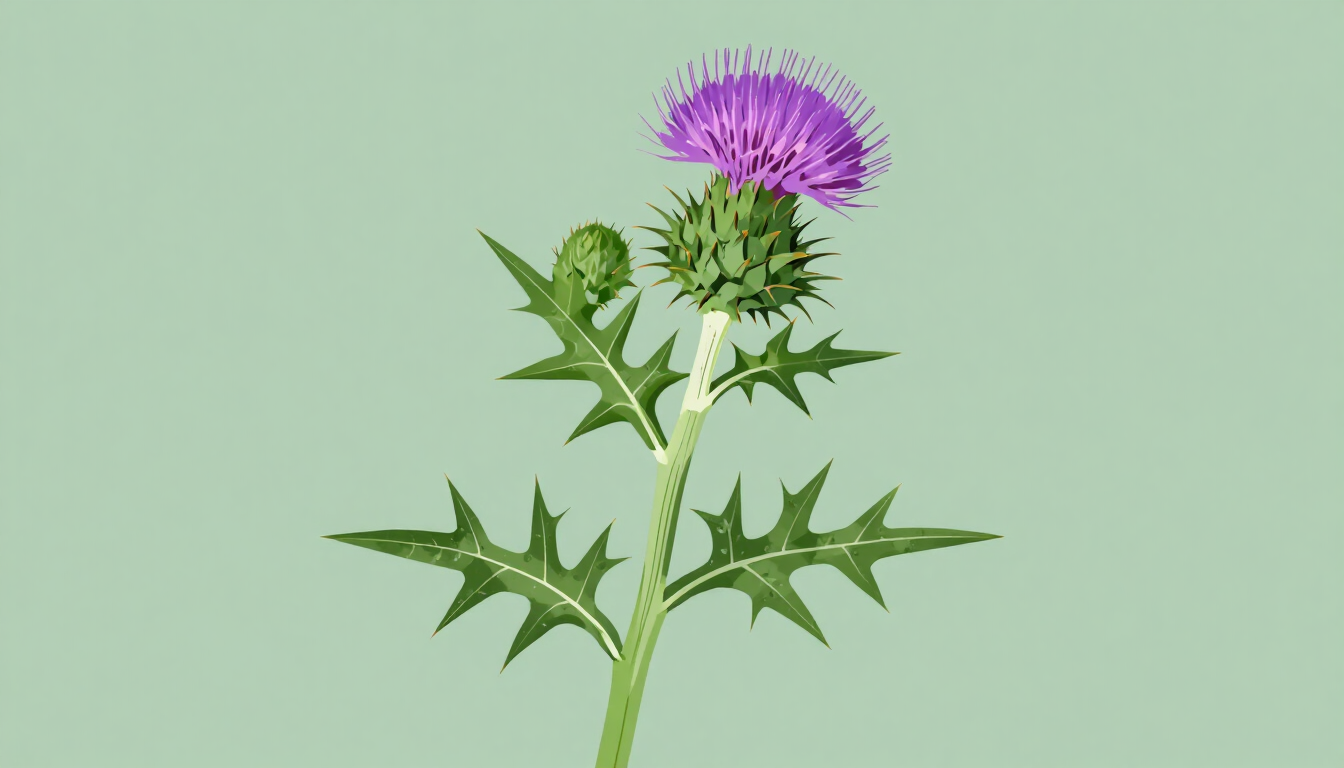
Milk thistle is a tall, spiky plant with purple flowers and glossy green leaves marked with white veins. According to old European folklore, the white veins came from the milk of the Virgin Mary, which is how the plant earned its name.
The Latin name for milk thistle is Silybum marianum. If you are shopping around or reading older books, you may run into another name for milk thistle, because it goes by several: Mary thistle, holy thistle, Marian thistle, and Mariendistel in German. They all point to the same plant.
The seeds hold the active material, a group of compounds called silymarin. The main ones are silybin (also written silibinin), silychristin, and silydianin. So when someone asks "silymarin, what is it used for," the short answer is this: it is the extract of milk thistle seeds, and it is the part that researchers study for liver protection, antioxidant activity, and anti-inflammatory effects.
| Quick Fact | Details |
|---|---|
| Botanical name | Silybum marianum |
| Other common names | Mary thistle, holy thistle, Marian thistle, Mariendistel |
| Active extract | Silymarin (silybin, silychristin, silydianin) |
| Part used | Seeds |
| Typical supplement standard | About 80% silymarin |
| Common forms | Capsules, tablets, tinctures, teas |
Medicinal Uses for Thistle Through History
People have relied on medicinal uses for thistle for roughly two thousand years. Greek and Roman writers recommended it for snake bites and liver complaints. Medieval herbalists used it for jaundice and digestive trouble, and nursing mothers drank it to boost milk supply.
Today the uses for thistle are far more varied. Some people still brew the seeds as tea. Others take standardized capsules for the liver, and a few use creams made with silymarin on the skin. Modern research mostly focuses on the liver, with a smaller body of work on blood sugar and metabolism.
Milk Thistle and the Liver: The Strongest Case
The liver is where milk thistle has its best reputation, and also where the evidence is most debated. Silymarin acts as an antioxidant, may calm inflammation, and appears to help protect liver cells from certain toxins in lab and animal studies. Human results have been less consistent.
The U.S. National Center for Complementary and Integrative Health (NCCIH) states that there is not enough high-quality evidence to reach firm conclusions about milk thistle for most health conditions. Here is how that plays out for specific liver problems.
Milk Thistle for Liver Damage
People often reach for milk thistle for liver damage caused by medications, alcohol, or fatty liver disease. The best-supported area is fatty liver. A meta-analysis of 26 randomized trials with about 2,375 participants, cited by the Merck Manual, found lower liver enzymes and improved fatty liver scores in people with nonalcoholic fatty liver disease. That is encouraging, though enzyme changes do not always translate into better long-term outcomes.
Milk Thistle for Liver Cirrhosis
Cirrhosis is scarring of the liver, and it is one of the traditional reasons people take the herb. Evidence that milk thistle for liver cirrhosis helps people live longer or avoid complications is weak. Some small trials hinted at benefit, but they were limited by design problems. If you are searching for milk thistle for cirrhosis, treat it as, at most, a supplement to medical care, never a replacement.
The same goes for milk thistle for ascites, the fluid buildup in the abdomen that can come with advanced cirrhosis. There is no reliable evidence that it reduces ascites. Ascites needs medical treatment, usually diuretics, salt restriction, and sometimes fluid drainage, so please do not try to handle it with supplements alone.
Milk Thistle for Hep C
This one has been tested properly. A large 2012 trial published in JAMA gave people with chronic hepatitis C higher-than-usual doses of silymarin, and it performed no better than placebo. NCCIH notes that two rigorously designed studies showed no benefit. So milk thistle for hep C is not a proven approach, and modern antiviral drugs cure most cases anyway.
Milk Thistle for Autoimmune Hepatitis
There are no good human trials on milk thistle for autoimmune hepatitis. This condition is treated with immune-suppressing medication, and adding a supplement that affects liver enzymes without telling your specialist is a bad idea. Ask your hepatologist before trying anything.
Milk Thistle for Alcoholics and Alcohol Detox
Milk thistle has a long reputation as a hangover or recovery aid, but it does not cancel out drinking. A Cochrane review of trials in alcoholic and viral liver disease found no clear effect on survival or liver complications. The same applies to milk thistle for alcohol detox: it does not clear alcohol faster or make heavy drinking safer.
For milk thistle for alcoholics, the honest message is that stopping alcohol and getting medical support does far more for the liver than any supplement. Anyone withdrawing from heavy drinking should do so under medical supervision, since withdrawal itself can be dangerous.
| Liver Condition | Evidence for Milk Thistle | Plain-English Verdict |
|---|---|---|
| Fatty liver (NAFLD/MASLD) | Several trials show improved enzymes | Promising, not conclusive |
| Cirrhosis | Small, flawed studies | Unproven |
| Hepatitis C | Large trial showed no benefit over placebo | Not effective |
| Autoimmune hepatitis | No quality human trials | Unknown |
| Alcohol-related liver disease | Mixed, no clear survival benefit | Unproven |
| Ascites | No evidence | Not a treatment |
Milk Thistle for Blood Sugar, Diabetes, and Insulin Resistance
After the liver, metabolism is the next best-studied area. Several reviews have linked silymarin to modest improvements in glucose and cholesterol levels, mostly in people already taking standard diabetes medication.
For milk thistle for diabetes, small trials in people with type 2 diabetes found lower fasting glucose and HbA1c when silymarin was added to usual treatment. For milk thistle for insulin resistance, the data are thinner, with some studies showing better insulin sensitivity but others showing no change. If you are looking at milk thistle for blood sugar control, think of it as a possible helper, not a substitute for medication, diet, and exercise.
One practical warning: because it may lower glucose, combining it with diabetes drugs could, in theory, push your sugar too low. Check with your doctor and monitor your numbers. For a more individualised approach, see our guide to AI personalized supplement intake across the lifespan.
Milk Thistle for Blood Pressure
Sib Supplimenti bla Riċetta f'Sekondi
Daħħal prodott, ingredjent jew kategorija biex tfittex fir-repożitorju.
People often ask about milk thistle for high blood pressure because silymarin has antioxidant and anti-inflammatory properties that could, in theory, benefit blood vessels. In reality, human trials on milk thistle for blood pressure are scarce and results are inconsistent. It is not a recognized blood pressure treatment. If you take blood pressure medication, do not stop it or swap it for a supplement.
Are Milk Thistle Benefits for Kidneys Real?
Kidney health is a growing topic. Lab and animal studies suggest silymarin may protect kidney cells from damage caused by certain drugs and toxins, which is why you will see "silymarin for kidney protection" mentioned online. A few small human studies in people with diabetic kidney disease reported improvements in markers such as protein in the urine.
Still, the evidence is early. Saying "milk thistle good for kidneys" goes further than the research allows, and the same applies to milk thistle benefits for kidneys in general. As for milk thistle for kidney failure, there is no proof it helps, and people with reduced kidney function should talk to a nephrologist before taking any herbal supplement, because the kidneys clear many substances from the body.
Milk Thistle Benefits for Skin and Hair
Silymarin shows up in plenty of skincare products, and the story is that its antioxidant properties help defend skin from sun and pollution. Lab and early topical studies support this idea, but large human trials are missing. So the milk thistle benefits for skin are plausible, not proven. For more on skin nutrition, see our guide to skin health from within.
For milk thistle for eczema, no solid clinical trials exist. Some people report calmer skin, but that is anecdotal. And milk thistle for hair regrowth has no human research behind it at all. If you are losing hair, a dermatologist can find the actual cause, which is often hormonal, nutritional, or stress related.
Digestive Complaints: Reflux, Ulcers, and Diarrhea
Milk thistle has been used for digestion for centuries, and some people look to it for stomach problems.
For milk thistle for acid reflux and milk thistle for GERD, there are no clinical trials showing it reduces symptoms. Some animal studies suggest silymarin might protect the stomach lining, which leads people to search milk thistle for stomach ulcers and milk thistle for ulcers in general. That is lab-level evidence only. Many ulcers are caused by H. pylori bacteria and need antibiotics, so self-treating can delay real care.
As for milk thistle for diarrhea, the reverse is closer to the truth. NCCIH lists a laxative effect, loose stools, and bloating among the known side effects, so it can cause diarrhea rather than ease it. For a related look at fiber and bowel habits, see our article on whether Benefiber is good for diarrhea.
Allergies, Flu, Herpes, and Yeast Infections
The immune and infection claims are where marketing runs ahead of science.
- Allergies: There is no good evidence for thistle for allergies or milk thistle for allergies. In fact, milk thistle belongs to the daisy family (Asteraceae), so people allergic to ragweed, daisies, or chrysanthemums may react to it.
- Flu: Laboratory work has looked at silymarin against influenza viruses, but there are no human trials for milk thistle for flu.
- Herpes: Cell studies hint at antiviral activity, yet milk thistle for herpes has not been shown to work in people.
- Yeast infections: No clinical data support milk thistle for yeast infections. Recurrent infections deserve a proper diagnosis.
Other Claims: Lymphatic System, Spleen, Mood, Eyes, and Sleep
A number of other claims circulate with little or no research behind them.
| Claim | What We Know |
|---|---|
| Milk thistle for lymphatic system | No studies. Often repeated in wellness circles but unsupported. |
| Milk thistle for enlarged spleen | No evidence. An enlarged spleen often signals liver disease, infection, or a blood disorder and needs a medical workup. |
| Milk thistle for depression | Only small, early studies on silymarin and mood. Not an established treatment. |
| Milk thistle for eye floaters | No evidence. Sudden new floaters should be checked by an eye doctor quickly. |
| Milk thistle for sleep | No clinical support. Any calming effect is anecdotal. |
Is Milk Thistle Safe for Pregnancy?
This is a common question, and caution is the right answer. There is not enough reliable safety data, so "milk thistle safe for pregnancy" cannot be confirmed. Most medical sources suggest avoiding it unless your doctor specifically approves. Milk thistle has also been used traditionally to support breast milk, but studies have not clearly shown that it works, so it is worth discussing with a healthcare provider if you are nursing.
Side Effects and Drug Interactions
For most people with liver conditions, milk thistle is generally well tolerated. Reported side effects include:
- Loose stools or a laxative effect
- Nausea
- Abdominal bloating and discomfort
- Occasional allergic reactions, including rashes
Because silymarin may affect certain liver enzymes that process medicines, it could change how some drugs work, including some diabetes, cholesterol, and blood-thinning medications. Always tell your doctor or pharmacist about every supplement you use.
How to Take It: Dose and Timing
Research studies commonly use standardized extracts delivering roughly 140 to 420 mg of silymarin per day, split into two or three doses. Look for products standardized to about 80% silymarin, and choose brands that use third-party testing, since supplements are not tightly regulated.
What is the best time of day to take milk thistle for liver support? No trial has proven one perfect time. Most people take it with meals, for example breakfast and dinner, because food may improve tolerance and absorption is naturally low. Consistency matters more than the exact hour. Taking it at the same times each day makes it easy to stick with. For more on timing in general, see our guide to night-time supplements and what works better after dark.
The Bottom Line
So, is milk thistle good for anything? Yes, a little. The most credible benefits are for fatty liver markers and possibly blood sugar control in people with type 2 diabetes, and it is usually well tolerated. Beyond that, most of the popular claims, from hepatitis C to hair regrowth, are unproven or have been tested and failed.
If you want to try it, treat it as a modest add-on rather than a cure, speak with your doctor first, especially if you are pregnant, have kidney disease, take prescription medication, or live with a serious liver condition, and never use it to delay proper treatment. Remember that supplements are not overnight pills — liver changes take time. For guidance on where to shop safely, see our roundup of the best website to buy supplements. You can explore more general health and wellness resources on OTC Supps, or try the AI supplement finder to locate products that match your goals.
This article is for general information only and is not medical advice. It does not diagnose, treat, cure or prevent any disease. Sources include the National Center for Complementary and Integrative Health, the Merck Manual, the Cochrane Library, the Agency for Healthcare Research and Quality, and the 2012 JAMA trial of silymarin in chronic hepatitis C. Individual needs vary; speak with a qualified healthcare professional before starting any supplement, especially if you take medication or have a health condition.


