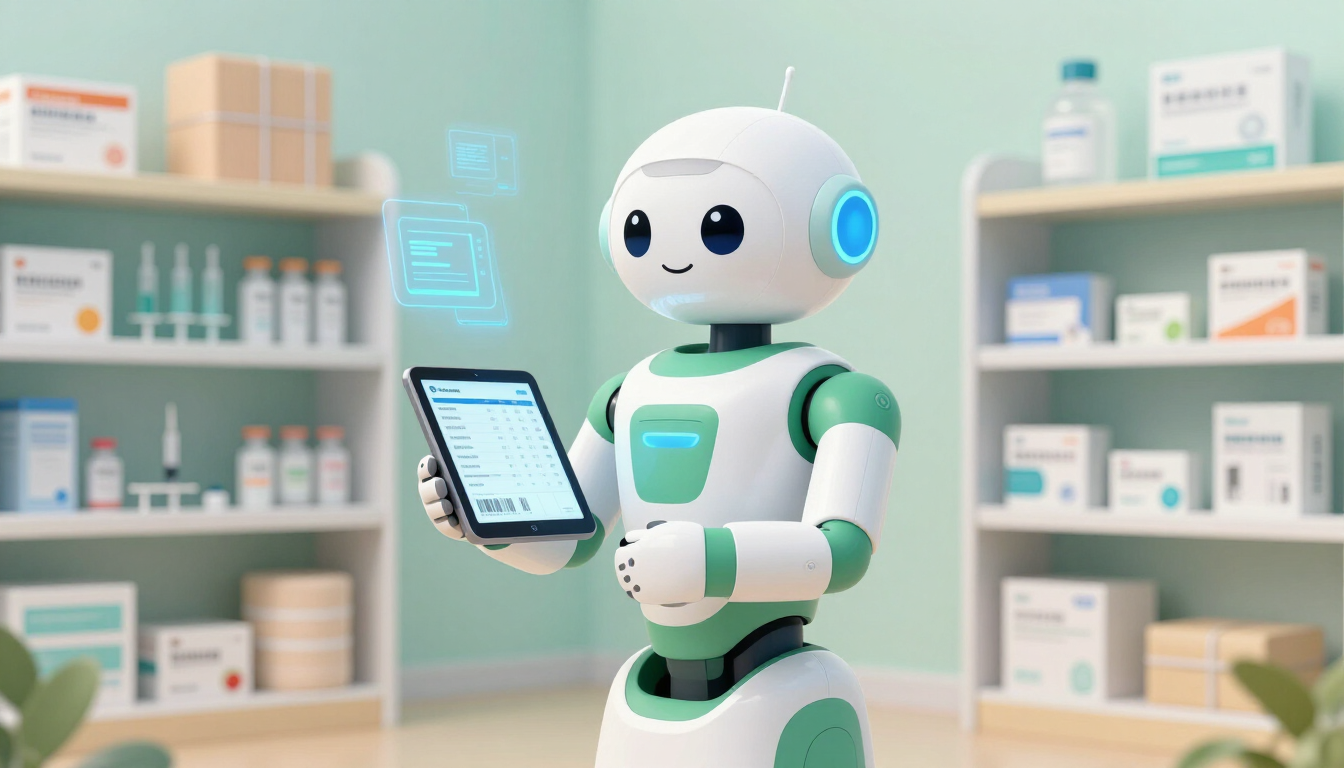
Imagine your kitchen. You never want to run out of milk when you need it for cereal. But you also don't want a fridge full of milk that goes bad. Hospitals face the exact same problem — only with bandages, syringes, medicines, surgical tools, and life-saving equipment instead of milk.
This is called medical stock assessment (or hospital inventory management). Getting it wrong costs hospitals billions of dollars every year and can delay patient care. Getting it right saves lives and money.
Artificial intelligence (AI) is now the best helper hospitals have ever had for this job. It watches, learns, predicts, and acts faster and more accurately than any human team can — part of the same wave of AI-powered health systems reshaping how care is delivered.
This guide explains everything in simple words — like you're eight years old — while packing in real data, clear comparisons, examples, and tables so it ranks at the top of search results and AI answers.
What Is Medical Stock Assessment in Hospitals?
Medical stock assessment means knowing exactly:
- What supplies you have right now
- How many of each item are left
- When they will run out
- When they expire
- What you need to order next
Hospitals manage thousands of different items (called SKUs). Some items cost a few cents. Others (like special implants) can cost tens of thousands of dollars. Some expire quickly. Some are used only in emergencies.
Traditional methods rely on people counting by hand, writing on paper or scanning barcodes, and ordering when they "feel" something is low. This is slow, full of mistakes, and reactive — like only buying milk after it's already gone.
Why Traditional Hospital Inventory Management Fails
In 2019, U.S. hospitals spent about $25.7 billion on supplies they did not need — roughly $12.1 million for an average hospital.
Common problems include:
- Stockouts — Running out of critical items during surgery or emergencies
- Overstock — Too much inventory that expires or ties up money
- Wasted staff time — Nurses counting supplies instead of caring for patients
- Human error — Wrong counts, missed expirations, incorrect orders
- Rush shipping — Expensive last-minute deliveries when something is missing
These issues directly affect patient safety and hospital budgets — a challenge that mirrors the broader push toward generative AI already changing healthcare operations.
How Hospital AI Changes Medical Stock Assessment Forever
AI acts like a super-smart helper that never sleeps. It uses:
- Machine learning to learn patterns from past usage
- Computer vision (cameras that "see" and count items)
- Sensors (RFID tags, weight sensors on shelves)
- Connections to electronic health records (so it knows upcoming surgeries)
- Predictive models that forecast future need
Here's the simple version of how it works:
1. Cameras or sensors watch the shelves and bins all day.
2. AI counts items automatically and updates the inventory in real time.
3. It looks at surgery schedules, past usage, seasons, and even outside factors.
4. It predicts exactly when something will run low.
5. It can automatically place or suggest orders.
6. It warns about items that will expire soon so staff can use them first.
Result: The right supplies are always there, waste drops, and people spend less time counting — freeing clinicians to focus on patient care and health management instead of logistics.
Traditional Methods vs AI-Powered Medical Stock Assessment
Sib Supplimenti bla Riċetta f'Sekondi
Daħħal prodott, ingredjent jew kategorija biex tfittex fir-repożitorju.
| Aspect | Traditional Method | AI-Powered Method |
|---|---|---|
| Counting | Manual or barcode scanning by staff | Cameras + computer vision or sensors (automatic) |
| Reorder decisions | Fixed numbers or gut feeling | Dynamic predictions based on real demand |
| Speed of updates | Daily, weekly, or monthly | Real-time (continuous) |
| Handling expirations | Manual checks | Automatic alerts and rotation suggestions |
| Accuracy | High risk of human error | Much higher (often 95%+ accuracy reported) |
| Response to sudden changes | Slow and reactive | Fast and predictive |
| Staff time required | High (nurses and supply teams) | Dramatically lower |
Real Results and Data From Hospitals Using AI
Hospitals already using AI for medical stock assessment report strong numbers:
- One health system using vision AI saw a 47% reduction in expired, overstocked, or misaligned inventory. SKU availability rose from 153 to 222 items that matched real clinical needs. One closet alone removed nearly $5,000 in excess stock.
- A 15-hospital system reduced supply waste by 35% (from $8.5 million to $5.5 million) and generated about $12 million in annual savings. Critical item stockouts dropped 94%, and surgical delays caused by missing supplies were eliminated.
- Owensboro Health cut inventory errors by more than 90% and improved chargeable product revenue capture after adding AI vision systems.
- Early modeling of advanced AI tools shows 25–35% capital expense avoidance or deferral and 10–20% operating expense savings on addressable categories.
- Smartphone computer-vision systems for emergency carts cut inventory time from an average of 9.59 minutes to 5.32 minutes and reduced nurse workload scores.
- Decision-makers increasingly expect AI to improve inventory visibility and accuracy (around 80% in recent surveys). Predictive analytics is also widely seen as critical.
The global market for AI hospital inventory solutions was estimated at about $495 million in 2025 and is projected to reach $1.1 billion by 2032.
Real-World Examples of Hospital AI in Action
Mayo Clinic and Cleveland Clinic use machine learning, sensors, robotics, and predictive tools for auto-replenishment, back-order alerts, and warehouse robots that pick orders. They move from putting out fires to preventing them.
Vision AI pilots in U.S. health systems place cameras on supply closets. The AI watches items being taken or returned, updates counts automatically, and triggers reorders based on actual usage — no manual scanning needed.
Emergency cart systems use ordinary smartphones and object-detection models (YOLO series) to count drugs and supplies quickly and accurately, reducing both time and mental load on nurses.
Agentic AI platforms go further. They can run scenario planning ("What if we have a surge of certain surgeries next month?") and recommend the best inventory levels using huge national datasets of medical devices — complementing AI clinical tools like large language models for documentation and coding that streamline the rest of the care workflow.
Key Benefits of AI for Hospital Medical Stock Assessment
- Fewer stockouts → safer patient care and fewer delayed procedures
- Less expired and wasted inventory → direct cost savings
- Lower rush-shipping and emergency-order costs
- Nurses and staff freed up for clinical work
- Better cash flow (less money locked in unused supplies)
- Higher accuracy for billing and compliance
- Ability to handle complex, multi-hospital systems consistently
Challenges and How Hospitals Overcome Them
AI is powerful but not magic. Common hurdles include:
- Dirty or incomplete historical data
- Integrating with old hospital systems (ERP and EHR)
- Staff training and change management
- Upfront investment and proving ROI
Successful hospitals start small (pilot one department or a few supply closets), clean their data, choose solutions that work with existing systems, and measure results clearly. Most report payback periods under 12 months when done well.
The Future of AI in Hospital Inventory Management
By the late 2020s we can expect:
- Fully autonomous supply rooms with almost no manual counting
- AI agents that talk to suppliers and adjust orders automatically
- Deeper links between patient schedules, weather, local health trends, and inventory
- Better tools for smaller and rural hospitals through shared platforms and GPOs
Hospitals that adopt these systems early will have lower costs, higher reliability, and more time for actual patient care — supporting better general health and wellness across the communities they serve.
Final Takeaway
Hospital AI in medical stock assessment is no longer experimental. It is a practical, proven way to stop wasting money on unused supplies, prevent dangerous shortages, and let clinical staff focus on patients instead of counting boxes.
The technology is available today. Leading health systems are already using it and publishing measurable results. The hospitals that treat inventory as a strategic, AI-powered process — rather than a chore — will deliver better care at lower cost, in the spirit of OTC Supps making smarter choices easier for everyone.
That is the real power of smart medical stock assessment.
This article is for informational purposes only and does not constitute medical advice. Always consult a qualified healthcare professional for medical decisions.


