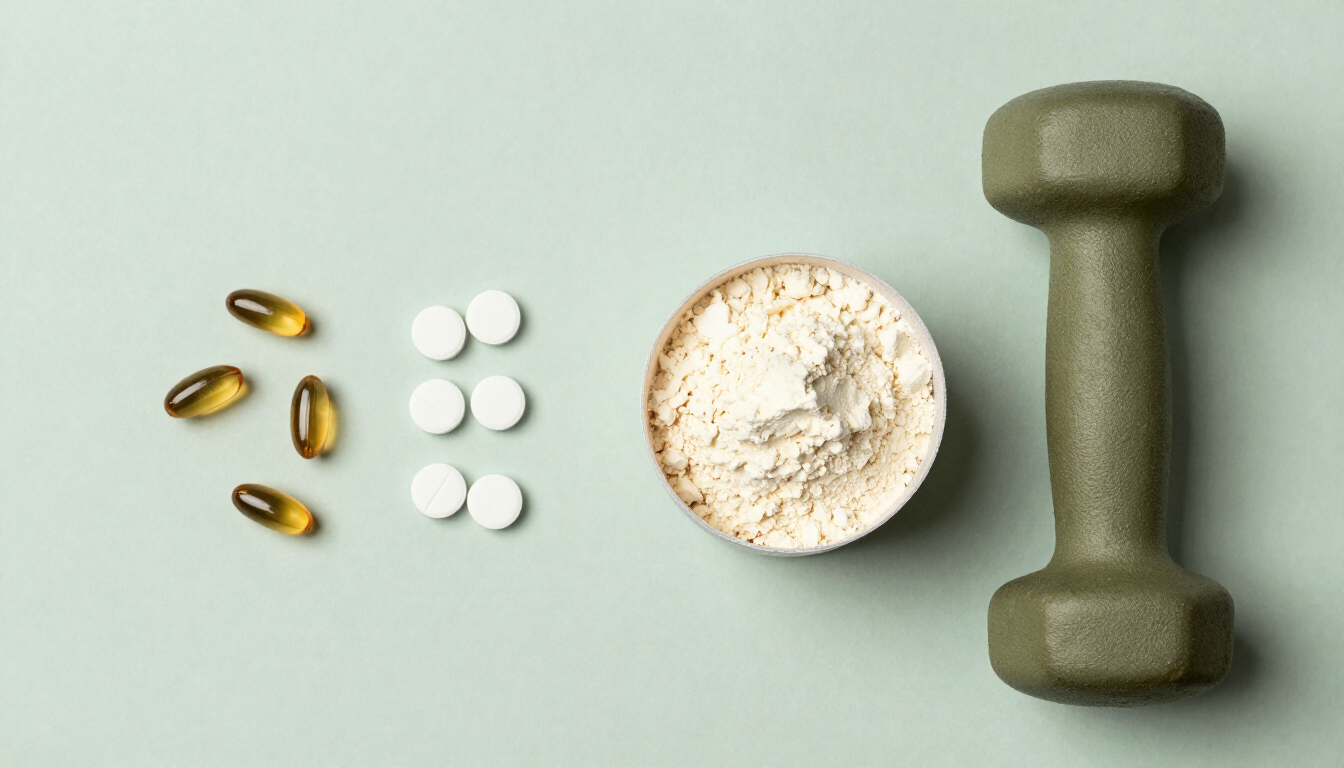
If you are skinny, struggling to put on size, and standing in a supplement aisle looking at a bottle that says "Amino 3000," you probably have one question: will this help me gain weight?
The short answer is that Amino 3000 can support muscle recovery, but it is not a weight gain product on its own. Weight gain comes from eating more calories than you burn, and a handful of amino acid tablets or softgels adds very few calories. Still, there are smart ways to use it, and some people get real value from it.
This guide explains what Amino 3000 is, what is inside it, what the research says, and how to build a plan that actually moves the scale. If you are new to building a routine, start with our guide on how to choose a supplement, and you can cross-check any product with the AI supplement finder.
Quick Facts at a Glance
Amino 3000 is a name used by more than one sports nutrition brand. The two best known are MET-Rx Amino 3000, a tablet that lists a blend of individual amino acids plus a little vitamin C, and GNC Pro Performance Amino Acid 3000, a softgel marketed as a full spectrum blend of essential and branched-chain amino acids. The "3000" refers to the roughly 3,000 mg of amino acids per serving, which is only 3 grams. That number sounds big on a label, but it is small next to the protein you get from normal food.
Because formulas differ by brand and even by production year, always read the supplement facts panel on the bottle you are holding. The table below reflects commonly reported details for these two versions; treat it as a starting point, not a guarantee.
| Detail | MET-Rx Amino 3000 | GNC Pro Performance Amino Acid 3000 |
|---|---|---|
| Form | Tablets | Softgels |
| Main purpose | Training support | Training support, athlete friendly |
| Key ingredients | Blend of individual amino acids plus vitamin C | Essential amino acids and BCAAs |
| Serving size | Varies by label | 3 softgels |
| Servings per bottle | Varies by label | Commonly 60 (180 softgels) |
| Calories per serving | Very low | About 40 (as reported) |
| Protein per serving | Varies by label | About 3 g |
| Allergens | Check label | Contains milk and soy (check label) |
| Approximate price | Varies by seller and region | Around $34.99 per bottle (varies) |
Prices and labels change over time and by region, so treat this table as a starting point and check the current product page before buying. For guidance on where to shop safely, see our roundup of the best website to buy supplements.
What Is Inside Amino 3000?
Amino acids are the small building blocks that make up protein. Your body uses them to repair muscle, make enzymes and hormones, and support many other jobs.
The MET-Rx label lists amounts for each amino acid per serving. The values below come from one reported version of the label and may differ between batches and regions:
| Amino acid | Amount per serving (one reported version) |
|---|---|
| Glycine | 636 mg |
| Glutamic acid | 273 mg |
| Alanine | 229 mg |
| Arginine | 210 mg |
| Aspartic acid | 122 mg |
| Valine | 60 mg |
| Threonine | 51 mg |
| Ornithine | 45 mg |
| Tyrosine | 16 mg |
You will notice that glycine, glutamic acid and alanine make up a big share. These are non-essential amino acids, which means your body can already make them. The three branched-chain amino acids (BCAAs), leucine, isoleucine and valine, are present but in modest amounts in this particular formula.
The GNC version is built differently. It is a softgel that the brand describes as a full spectrum blend of essential amino acids and BCAAs, and some versions are tested for banned substances, which matters if you compete in tested sports. Another softgel on the market, Ultimate Nutrition Amino Softgels, advertises 3,000 mg of amino acids including 500 mg of BCAAs, which gives you an idea of how small the BCAA portion usually is. Always verify the current label, since formulas are reformulated over time.
Can Amino 3000 Help You Gain Weight?
Here is the honest answer, broken into the three things that matter.
1. Calories decide weight gain
You gain weight when you eat more energy than you use. A serving of GNC Amino Acid 3000 delivers about 40 calories and 3 grams of protein, according to reported label values. Even if you took the label maximum of three servings a day, that is roughly 120 calories. A single glass of whole milk has more.
So if your goal is to go from 60 kg to 70 kg, the supplement is not going to carry you there. For a food-first approach to adding calories, see our guide to weight gainer shakes for women at home, which works for anyone trying to add calorie-dense liquids.
2. Amino acids alone are not a complete muscle meal
Your body needs all nine essential amino acids to build new muscle protein. Research on BCAAs has been disappointing on this point. A well-known 2017 review by protein researcher Robert Wolfe concluded that taking BCAAs alone does not give a true muscle-building response in humans, because the other essential amino acids are missing.
Other reviews agree. People who already eat enough protein, roughly 1.6 grams per kilogram of body weight per day, tend not to see extra muscle or strength from adding BCAAs.
3. There is a small upside for recovery
There is one area where amino acids have some support. A 2019 meta-analysis found that BCAA supplementation was linked to less muscle soreness after exercise. Other researchers note the results depend heavily on the dose and timing, and many of the studies compared BCAAs with a placebo that contained no protein at all.
If you train hard and feel sore, that could be a small bonus. It is not the same thing as gaining weight. Remember too that supplements are not overnight pills — body composition changes slowly.
Who Might Benefit From Amino 3000?
Not everyone should write it off. Amino 3000 can make sense for:
- Underweight people with a small appetite who find eating large meals difficult and want a convenient extra source of amino acids.
- Athletes who train fasted and want something light before or after a session.
- People on a very low protein diet, such as some vegetarians, who are not yet reaching their protein target.
- Tested athletes who need a product with banned substance testing (verify the current certification).
It makes much less sense for someone who eats plenty of protein but not enough total calories. That person needs more food, not more tablets. If you are also exploring other approaches to healthy weight gain, our article on Astyfer syrup for weight gain covers a different category of product.
Amino 3000 vs Real Food: A Fair Comparison
The table below shows approximate protein and calories for common foods next to one serving of Amino Acid 3000.
| Food or product | Approx. protein | Approx. calories |
|---|---|---|
| GNC Amino Acid 3000 (3 softgels) | 3 g | 40 |
| 1 large egg | 6 g | 70 |
| 1 cup whole milk | 8 g | 150 |
| 2 tbsp peanut butter | 8 g | 190 |
| 100 g cooked chicken breast | 31 g | 165 |
| 1 scoop whey protein | 20 to 25 g | 110 to 130 |
The gap is obvious. For the price of one bottle of Amino 3000, you could buy several weeks of eggs, milk and peanut butter, which also provide calories, fats, vitamins and minerals.
How to Actually Gain Weight: A Simple Plan
If you want results, build the plan around food first and treat any supplement as an extra.
Step 1: Eat in a calorie surplus
Most people who want to gain steadily do well with a surplus of about 300 to 500 calories above maintenance each day. That usually means a gain of roughly 0.25 to 0.5 kg per week, which keeps fat gain low.
Step 2: Hit your protein target
Aim for around 1.6 to 2.2 grams of protein per kilogram of body weight daily, spread across three to five meals. For a 65 kg person, that is about 105 to 143 grams a day.
몇 초 안에 일반의약품 보충제 찾기
제품, 성분 또는 카테고리를 입력하여 저장소를 검색하세요.
Step 3: Lift weights
Without resistance training, extra calories turn into fat. Train each muscle group at least twice a week, add weight or reps over time, and sleep seven to nine hours. For related reading on training support, see our natural testosterone boosters guide.
Step 4: Add calorie-dense foods
Small changes add up quickly:
- Blend milk, oats, banana and peanut butter into a shake.
- Cook with olive oil and add nuts to meals.
- Choose full-fat dairy.
- Snack on dried fruit, trail mix and rice cakes with nut butter.
Step 5: Consider the supplements that have stronger evidence
If you want to add a product, whey or another complete protein and creatine monohydrate have far better research behind them for muscle growth than a basic amino acid blend. You can also explore our roundup of the best supplements for energy if fatigue is holding back your training.
A Sample Day of Eating for Weight Gain
| Meal | Example | Approx. calories |
|---|---|---|
| Breakfast | 3 eggs, 2 slices toast with butter, banana, glass of milk | 650 |
| Mid-morning | Peanut butter sandwich and yogurt | 450 |
| Lunch | Chicken, rice, vegetables and olive oil | 750 |
| Pre-workout | Oats with milk and honey | 400 |
| Dinner | Salmon or beef, potatoes, salad with dressing | 800 |
| Evening | Cottage cheese with nuts, or a mass gain shake | 400 |
| Total | About 3,450 |
Adjust portions to match your body size and goals.
How to Take Amino 3000
Always follow the directions on your specific label. As a general guide:
- GNC Pro Performance Amino Acid 3000: the label has suggested three softgels, up to three times per day, with a full glass of water. Confirm the current label directions.
- Timing: many people take it around training, before or after a workout, since that is when it is marketed to help.
- Consistency: a supplement like this cannot work if you take it once in a while.
Start with the lowest serving and see how your stomach reacts.
Safety and Side Effects
Amino acid supplements are generally well tolerated by healthy adults at normal doses. Still, keep these points in mind:
- Allergies: some versions contain milk or soy. Read the allergen line on the bottle you have.
- Kidney or liver conditions: people with chronic kidney or liver disease should speak with a doctor before using concentrated amino acids.
- Pregnancy and nursing: check with a healthcare provider first.
- Medication: some amino acids, such as arginine, can interact with certain drugs, including blood pressure medicines.
- Quality: supplements are not approved by the FDA before sale. Look for products with third-party testing.
- Stomach upset: taking tablets on an empty stomach with little water can cause discomfort.
Is Amino 3000 Worth the Money?
If you are choosing between Amino 3000 and a better diet, put your money into food. A bottle that costs about $35 and lasts 60 servings works out to around 58 cents per serving, which is cheap in absolute terms but expensive per gram of protein compared with eggs, milk or whey.
It can be worth it if you value the convenience, need something athlete-tested, or want a small recovery aid on top of an already solid diet.
| Your situation | Should you buy it? |
|---|---|
| Not eating enough calories | No, fix your diet first |
| Eating enough, hitting protein goals, want small recovery support | Maybe |
| Competing in a tested sport | Maybe, choose a banned substance tested product |
| Looking for a shortcut to gain weight | No, it will not do that |
Frequently Asked Questions
Will Amino 3000 make me gain weight?
Not by itself. It provides very few calories. Weight gain needs a steady calorie surplus from food and drinks, along with strength training.
Is Amino 3000 better than protein powder?
For building muscle, a complete protein such as whey generally does more for the money. It supplies all essential amino acids in useful amounts, plus more protein per serving.
Can skinny people take Amino 3000?
Yes, healthy adults can generally take it, but it should be an add-on. Skinny people usually gain more from eating larger, more frequent meals.
How long does it take to see results?
If you eat in a surplus and lift weights, most people notice changes in four to eight weeks. Any effect from the supplement itself on soreness may be noticed sooner, but the effect on size will be small.
Can I take Amino 3000 with creatine and whey?
These are commonly combined without problems in healthy adults. Check the labels for overlapping ingredients and speak with a doctor if you take medication.
Does Amino 3000 cause weight gain as water or fat?
It is unlikely to cause noticeable weight changes either way at normal doses.
Final Thoughts
Amino 3000 is a decent, convenient supplement for people who train and want a little extra amino acid support. It is not a weight gain product, and the research does not back it as a shortcut to muscle.
If you want to gain weight, focus on the things that work every time: eat more calories than you burn, get enough protein, lift weights with progression, and sleep well. Then, if you still want an extra, add Amino 3000 as a finishing touch rather than the foundation. You can explore more muscle and fitness resources on OTC Supps, or try the AI supplement finder to locate products that match your goals. For a broader nutrition baseline, our guide to the best multivitamin for your body and goals is a good companion read.
This article is for general information only and is not medical advice. It does not diagnose, treat, cure or prevent any disease. Brand formulas, label details and prices change over time and by region; always read the supplement facts panel on the product you hold. Speak with a doctor or registered dietitian before starting any supplement, especially if you have a medical condition or take medication.


