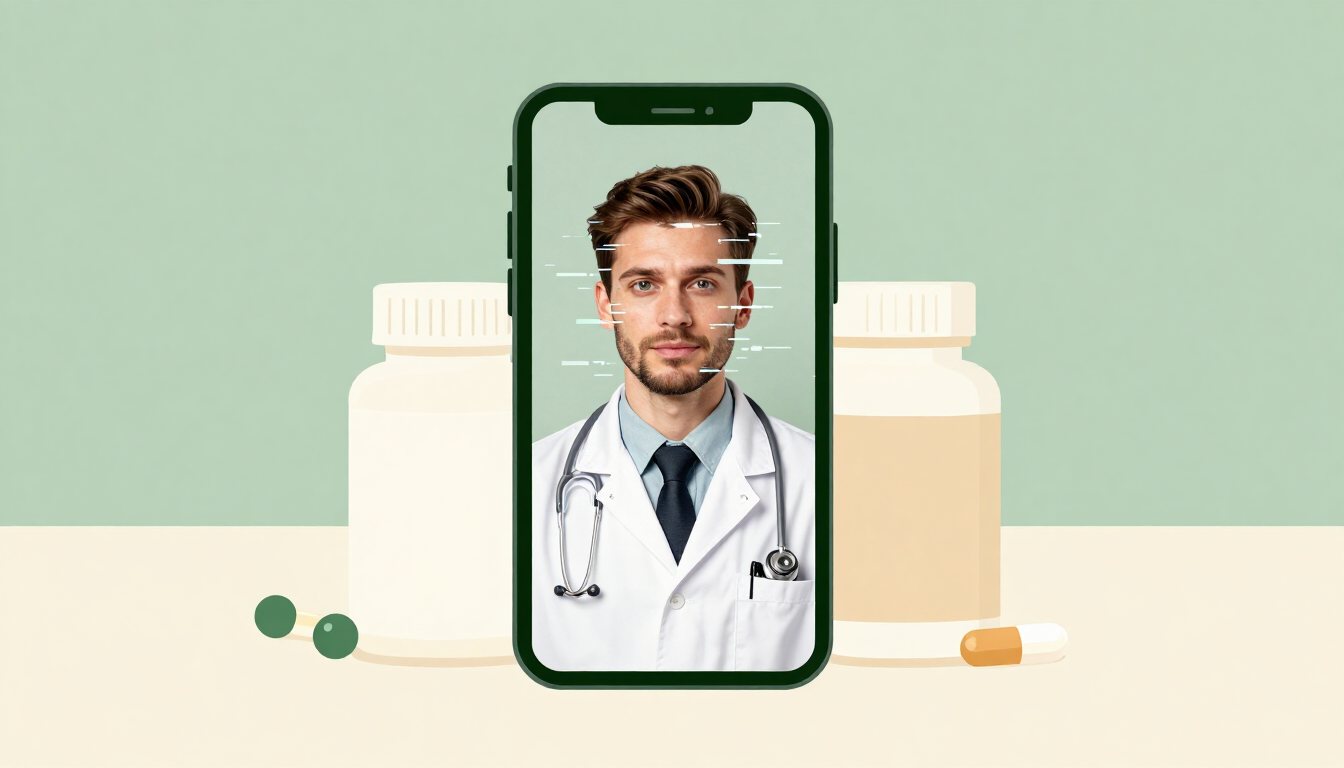
You open your phone, and a calm doctor in a white coat looks into the camera. He says a simple herbal tea can reverse diabetes. The voice is steady, the video looks professional, and thousands of people have already liked it. There is only one problem. The doctor never said any of it. The video was built by software, using his real face and a cloned voice.
This is no longer a rare event. Across TikTok, Instagram, and Facebook, supplement and vitamin ads now come from two directions at once: human influencers who are paid to sound convinced, and AI-generated videos that fake the very people we are meant to trust. Together they are wearing down public confidence in a product category that surveys suggest millions of people use every day.
This article explains what is happening, summarizes what investigations and surveys have reported, and gives you simple steps to protect your health and your wallet. If you are new to evaluating products, start with our guide on how to choose a supplement, and you can cross-check any product with the AI supplement finder.
Quick Summary
| Point | What the reporting suggests |
|---|---|
| Supplement use | Surveys suggest a large share of US adults use supplements, and social media is a common place to learn about them |
| Deepfake doctors | Investigations report AI-altered videos of real medical experts appearing to promote supplements |
| Influencer purchases | A BBB National Programs survey reported many consumers bought after an influencer endorsement, yet few fully trust them |
| Rules | The FTC updated its Endorsement Guides in 2023; some jurisdictions now require AI disclosure in ads |
| What you can do | The five-minute checklist below helps you check almost any supplement ad |
Why Supplements Are the Perfect Target
Supplements sit in a unique legal and emotional space. In the United States, the FDA regulates the product itself, but it does not approve supplements for effectiveness before they reach shelves. The FTC covers how those products are advertised. That split leaves gaps, and the social media economy has learned to live in them.
There is also an emotional reason. People take supplements when they feel tired, anxious about their weight, or worried about getting older. An ad that speaks directly to those worries feels personal, even when it is aimed at millions of viewers at once.
| Factor | Why it can help questionable ads spread |
|---|---|
| No pre-market approval for effectiveness | Brands can launch quickly with looser claims |
| Emotional buying triggers | Fear and hope can make people act fast |
| Short video format | Little room for evidence, warnings, or context |
| Cheap production | New ads can be made and tested daily |
| Fast checkout buttons | The gap between seeing and buying is only a few taps |
The First Crack: Influencers Who Sell What They Barely Understand
Influencer marketing works. A national survey run by BBB National Programs' National Advertising Division, known as the Influencer Trust Index, reported that 58% of consumers had bought something because of an influencer endorsement. Yet the same body of research reportedly found that only about 5% of people trust influencer content completely, and nearly 30% do not trust influencers at all.
In other words, people may be buying from voices they do not believe. That gap between purchase and trust is where long-term damage can build up.
Credentials are often missing
A study of more than 6,500 health and wellness influencers, each with at least one account above 100,000 followers, reportedly found that nearly as many described themselves as coaches or entrepreneurs as described themselves as health professionals. Another 16% were said to list no credentials at all.
Content quality reportedly follows the same pattern. Researchers at Flinders University in Australia reviewed health content on TikTok and Instagram in 2026 and, according to reports, found that close to 70% of it was misleading, with unqualified creators flagged as a major issue.
Young people are listening
A July 2026 Pew Research Center report found that 57% of women and 47% of men aged 18 to 29 get health and wellness information from influencers or podcasts. A separate survey cited by ZOE reportedly found that nearly one in five Americans trust health influencers more than medical professionals in their own community.
| Finding | Source |
|---|---|
| 58% of consumers bought after an influencer endorsement | BBB National Programs, Influencer Trust Index |
| About 5% fully trust influencer content | As reported, Institute for Responsible Influence |
| Nearly 70% of analyzed TikTok and Instagram health content was misleading | Flinders University study, 2026 (as reported) |
| 57% of women and 47% of men aged 18 to 29 use influencers or podcasts for health information | Pew Research Center, July 2026 |
| Only 14.8% said hashtags like #ad make an endorsement more trustworthy | NAD Influencer Trust Index (as reported) |
That last number matters. Even when influencers follow disclosure rules, many viewers reportedly read a tag like #ad as a reason to doubt, not a reason to trust. Honest disclosure alone may not repair the damage.
The Second Crack: AI Videos That Fake Trusted Faces
If paid influencers wear down trust slowly, AI-generated ads can break it in a single scroll.
Deepfake doctors
In an investigation reported by the Guardian, the fact-checking charity Full Fact reportedly found hundreds of AI-altered videos in which real medical experts appeared to promote supplements. The clips allegedly used genuine footage, in some cases taken from an event years earlier, with the faces and speech changed. Public health figures were reportedly falsely shown discussing menopause remedies. One video reportedly reached more than 365,000 views before it was taken down, and TikTok removed some of the videos only about six weeks after a complaint from one of the doctors, according to the reporting.
The problem is global. In Malaysia, consultant cardiologist Dr Onn Akbar Ali reportedly found a video using his face and voice to promote an herbal tea as a cure for diabetes. He reported it repeatedly. Some posts reportedly came down, while others stayed after the platform said it found no violation. A cancer patient in the same report reportedly developed liver inflammation after taking what he believed was a genuine supplement he had once received through a hospital.
The American Medical Association has also reportedly warned that these scams do more than harm individual buyers. They deepen a wider credibility crisis for doctors at a time when public health depends on trust. One physician reportedly told journalists that her own mother believed a fake video of her.
Deepfake celebrities
In August 2026, the Better Business Bureau reportedly warned about AI-made videos of celebrities and medical professionals pushing a weight loss product called LipoMax on Facebook and Instagram. The BBB's advice was simple: if a famous person truly backs a product, you will find it on their real, verified pages.
Security firm Bitdefender reportedly saw the same wave earlier. Its 2024 research counted more than 1,000 deepfake videos and over 40 misleading supplement ads across Facebook, Messenger, and Instagram, some running through compromised pages with hundreds of thousands of followers.
Cheap, fast, and endless
Reporting by the New York Times, summarized by the Deseret News, reportedly described a marketing agency producing AI ads at roughly $10 a video for products sold through TikTok Shop, including supplements. One ad allegedly claimed an herbal product could treat kidney disease better than medication. The "customers" in those videos were reportedly not real.
When a fake testimonial costs less than a cup of coffee, there is little reason for scammers to stop at one.
| Attribute | Human influencer ad | AI-generated ad |
|---|---|---|
| Cost per video | Fees, gifts, or commission | Around $10 in reported cases |
| Speed | Days or weeks | Minutes or hours |
| Real person behind it | Yes, though often unqualified | Often a stolen or invented face |
| Accountability | Can be named and warned | Accounts vanish and reappear |
| Typical trust damage | Slow erosion | Sudden shock when exposed |
What This Does to Everyone Else
The harm does not stop with the people who get scammed. Three side effects are reportedly spreading across the whole industry.
Honest brands get tarred. Legitimate supplement makers now compete against fake ads that promise miracles. When shoppers see too many lies, they may start doubting every bottle, including ones that are well made and properly tested.
Real experts lose their voice. Doctors and dietitians who share accurate advice now reportedly have to add "this is really me" to their videos. Some spend hours reporting fakes of themselves instead of treating patients.
Doctors must clean up afterward. In an eMarketer summary of provider surveys, clinicians who had to correct a patient's supplement beliefs most often reportedly traced them back to TikTok (68%), Facebook (64%), and Instagram (61%). Every correction costs appointment time and chips away at a patient's confidence in someone who got it wrong.
Намерете безрецептурни добавки за секунди
Въведете продукт, съставка или категория, за да претърсите хранилището.
A European project called Infoodmation, which reportedly analyzed over 540,000 social media posts, found that 67% of the misleading food and supplement examples it collected lacked the nutritional or ingredient information needed to judge the claim. The message is plain: the pitch arrives, the evidence does not. For more on spotting questionable products, see our guide to AI detection of counterfeit supplements.
Rules Exist, but They Move Slowly
The FTC updated its Endorsement Guides in 2023. They require clear and conspicuous disclosure of any paid or free connection between a brand and a creator, and the guidance says virtual endorsers are held to the same standards as human ones. If AI is used to simulate an endorsement, any material connection still has to be disclosed.
Local law is catching up too. New York reportedly now requires advertisers to flag AI-generated synthetic performers in ads, a rule said to have taken effect on June 9, 2026. In April 2026, BBB National Programs reportedly launched the Institute for Responsible Influence, which trains and certifies creators on disclosure rules.
Still, platforms say they ban misleading health claims and label AI content, yet reports show some videos slip through, and complaints can take weeks to resolve. For viewers, the safest assumption is that no gatekeeper will catch every fake before it reaches them. Remember too that supplements are not overnight pills — real results take time and evidence.
How to Check a Supplement Ad in Five Minutes
Use this checklist before you buy anything advertised on social media.
| Step | What to do | Red flag |
|---|---|---|
| 1. Check the source | Visit the doctor or celebrity's real, verified profile | The endorsement appears nowhere else |
| 2. Look at the claim | Ask what the product is said to cure | It treats many unrelated conditions |
| 3. Watch the video closely | Look for odd lip movement, stiff blinking, or flat tone | Mouth and voice do not quite match |
| 4. Find the evidence | Search the ingredient name plus "clinical trial" | Only testimonials, no studies |
| 5. Check the seller | Look for a real address, return policy, and independent reviews | New site, countdown timers, "only 3 left" |
| 6. Look for third-party testing | Seek seals from independent testing groups | No lab results available |
| 7. Ask a professional | Talk to your doctor or pharmacist | The ad tells you to avoid your doctor |
Words that should slow you down
- "Miracle," "secret," or "doctors hate this"
- "Natural alternative" to a prescription drug
- "Cures" or "reverses" a serious disease
- Before and after photos with no timeline
- Pressure to buy right now
If you take prescription medicine, speak to a pharmacist first. Even common vitamins and herbs can interact with drugs, and counterfeit products may contain ingredients that are not on the label. For guidance on where to shop safely, see our roundup of the best website to buy supplements.
What Brands and Creators Can Do to Win Trust Back
Trust can be rebuilt, but only with visible, consistent habits.
1. Disclose in the same format as the pitch. If the endorsement is spoken, say the disclosure out loud, not only in a caption.
2. Publish real evidence. Link to studies, ingredient lists, and third-party lab results on the product page.
3. Avoid disease claims. Describe what an ingredient is, not what it supposedly cures.
4. Verify your own ambassadors. Confirm credentials and keep records of what they said.
5. Watch for fakes using your name. Report impersonation fast and tell customers where your real accounts are.
6. Say no to synthetic testimonials. An invented customer is a fake review, and a fake review is a legal risk.
Frequently Asked Questions
Are all supplement influencers untrustworthy?
No. Some are trained clinicians, researchers, or registered dietitians who share careful advice. The point is to check credentials and evidence for every claim rather than trusting a confident tone.
How can I tell if a doctor in a video is a deepfake?
Watch for mismatched lip movement, unnatural pauses, and a voice that sounds slightly flat. Then verify: look on the doctor's official channels or their hospital's website. If a cure claim appears only in an ad, treat it as fake until proven otherwise.
Does #ad or #sponsored make a post more reliable?
It makes the post more compliant with disclosure rules, not necessarily more accurate. In the NAD survey, only 14.8% of people reportedly said such tags made an endorsement more trustworthy.
What should I do if I see a fake video of a real doctor?
Report it on the platform, do not share it, and if you know the doctor, tell them so they can file their own complaint. If you bought the product, keep records and contact your bank and a consumer protection agency.
Do vitamins and supplements actually work?
Some do, for specific needs. Doctors generally support well-studied nutrients such as vitamin D, B12, iron, magnesium, and calcium when a person is actually low in them. A blood test and a conversation with your doctor beat any ad. You can explore more general health resources on OTC Supps, or try the AI supplement finder to locate products that match your goals.
Final Thoughts
Social media made it easy to reach millions of people with a health message. It also made it easy to fake the faces people trust most. When paid influencers oversell and AI videos impersonate real doctors, shoppers learn a harsh lesson: nothing on the screen can be taken at face value.
The fix will not come from one law or one platform. It will come from a mix of clear disclosure, faster takedowns, honest brands, and viewers who check before they click. Next time a polished video tells you a tea, pill, or powder will change your life, pause for five minutes. Your health is worth that much.
Sources and Further Reading
- BBB National Programs, Influencer Trust Index and Institute for Responsible Influence (as reported)
- Full Fact investigation on AI deepfake doctors, as reported by the Guardian and eWEEK
- Better Business Bureau warning on deepfake celebrity supplement ads, August 2026 (as reported)
- Deseret News and New York Times reporting on AI health influencer ads, July 2026
- Bernama and New Straits Times, deepfake doctor scams in Malaysia, August 2026 (as reported)
- STAT News and the American Medical Association on deepfake doctors (as reported)
- Pew Research Center, health information from influencers, July 2026
- Flinders University study, Journal of Technology in Behavioral Science, July 2026 (as reported)
- EUFIC Infoodmation project on food misinformation in Europe (as reported)
- eMarketer summary of provider surveys on supplement beliefs
- FTC Endorsement Guides (16 CFR Part 255), revised 2023
- Bitdefender Labs research on supplement deepfake scams, 2024 (as reported)
This article is for general information only and is not legal or medical advice. Survey and study findings are summarized from public reporting and may be paraphrased; always consult the original sources. Figures and dates reflect what was reported at the time of publication and may change. Speak with a qualified healthcare professional before starting any supplement, especially if you take medication or have a health condition.


